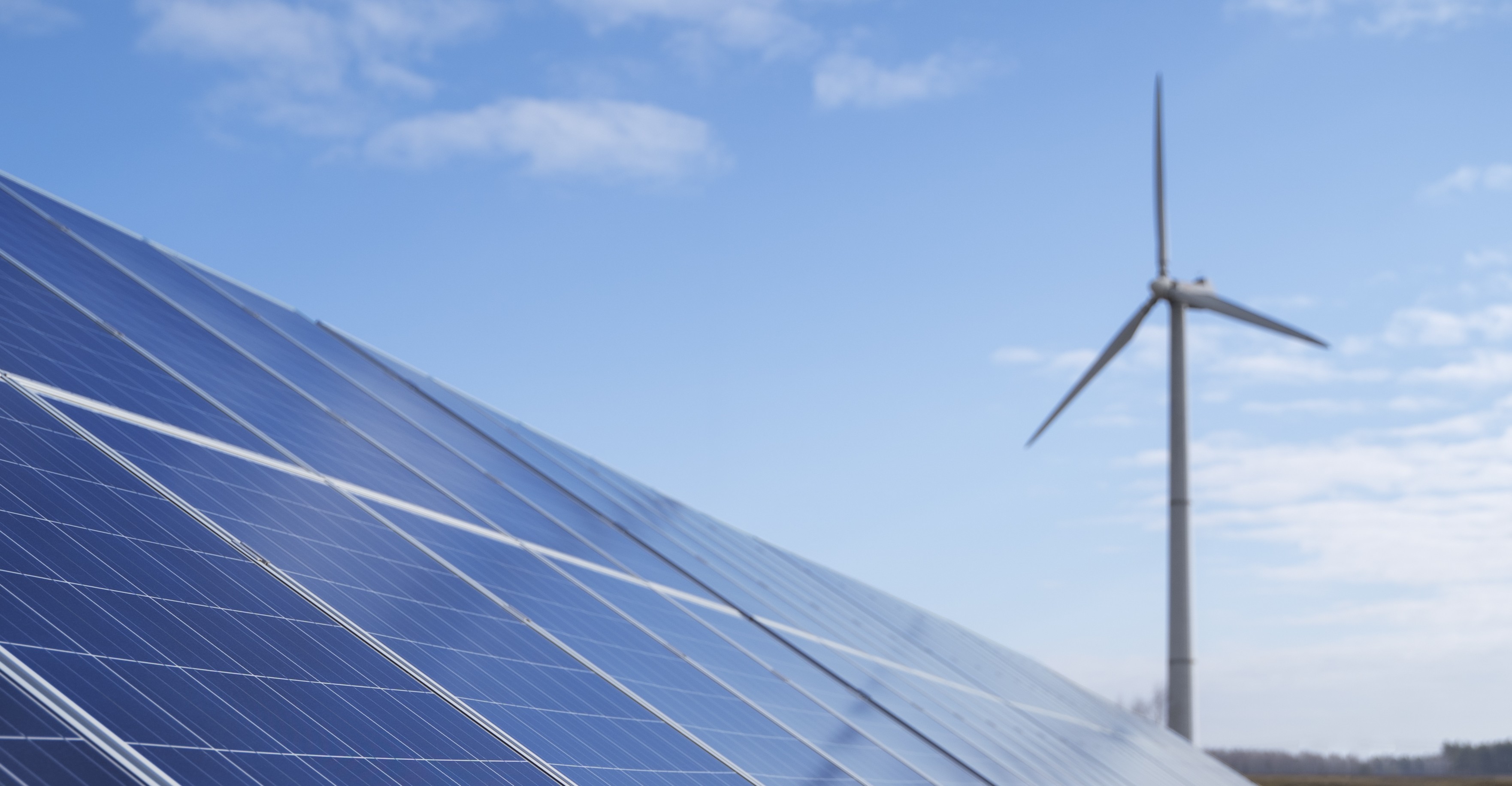

Solar panels and wind turbine
LIGHTEN-IO Project
Green Hydrogen
for the Indian Ocean
Building a regional network for low-carbon energy transition across the South-West Indian Ocean (SWIO).
Discover the project
SWIO map
Regional Cooperation
One region
One Hydrogen Vision
Indian Ocean Commission (IOC) member territories and INTERREG countries united to drive the hydrogen transition in the South-West Indian Ocean.
Explore the network
Climate data
Scientific Research
High-Resolution
Climate Data at ~1 km
Artificial Intelligence for statistical downscaling. Open-access THREDDS database for the entire South-West Indian Ocean region.
See the roadmap
01 / 03
0
Months
€0
Funding
0
Deliverables

This project is funded by the European Union under the INTERREG VI Indian Ocean programme, of which the Managing Authority is the Région Réunion.
Europe is committed to Réunion Island through the ERDF fund.
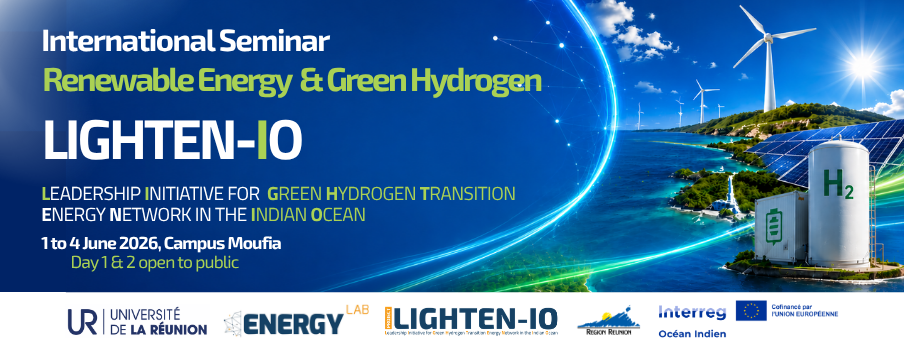
Latest news

Project updates

Seminar
June 2026
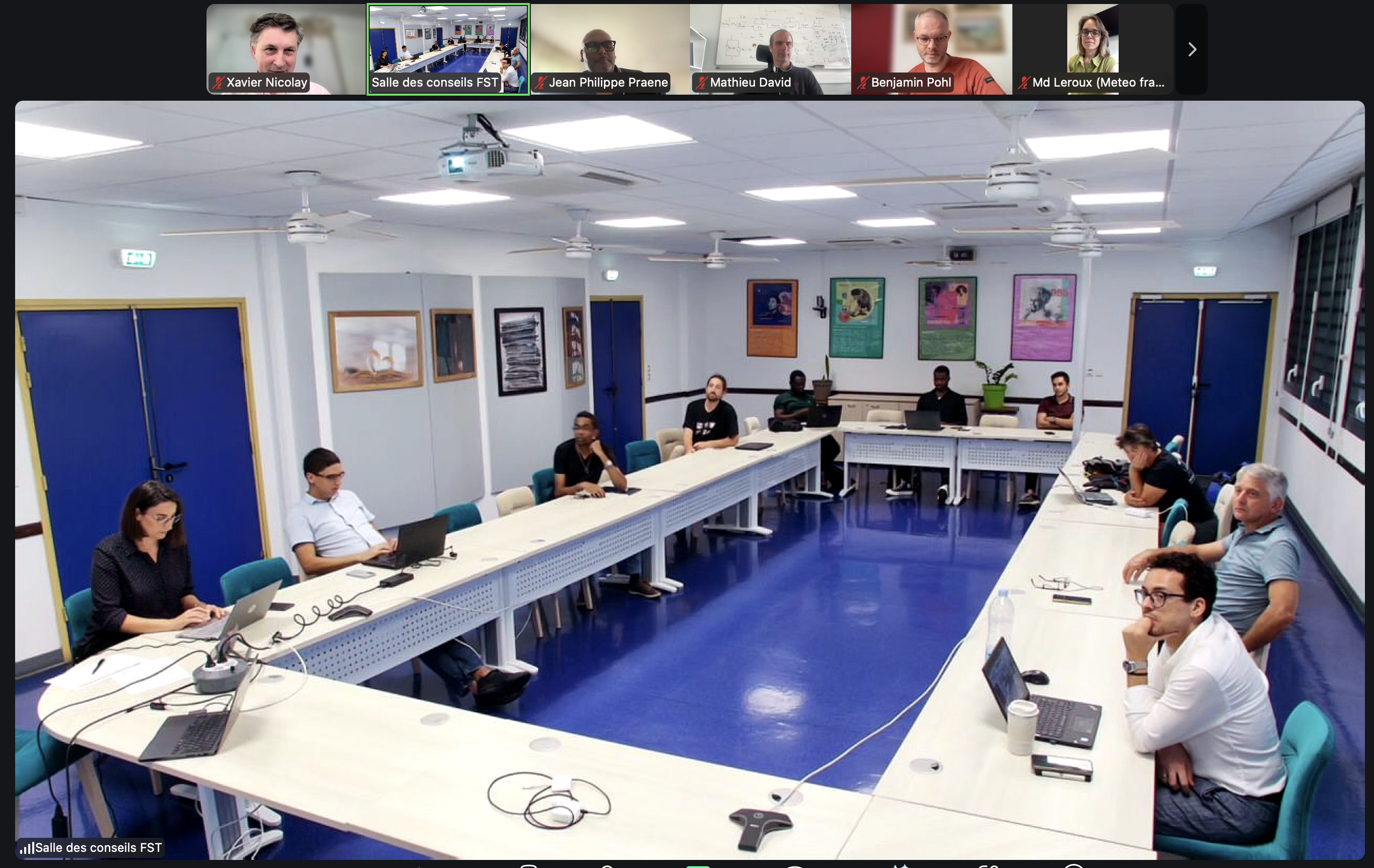
First regional seminar with project member states
Stakeholders from all target territories and institutional partners convened in Réunion for the inaugural LIGHTEN-IO seminar.
Read more
Kick-off
February 2026
Project officially launched in Saint-Denis
Kick-off meeting gathered all consortium partners at the University of La Réunion.
Read more
A regional network for
green hydrogen

LIGHTEN-IO structures a regional network for green hydrogen in the South-West Indian Ocean (SWIO), combining scientific research, high-resolution climate data and international cooperation.

Green H₂

In a context of strong demographic growth where more than 50% of the African population lacks access to electricity, producing green hydrogen by electrolysis powered by renewable energies is a leading option for the ecological transition of this region.

Renewable Energies

Solar and wind potential of South-West Indian Ocean islands (SWIO) for green H₂ production.

High-Resolution Data

Climate and topographic data at ~1 km spatial resolution.

Regional Cooperation

Indian Ocean Commission (IOC) network — universities, meteorological services, governments.

Scientific Innovation

Artificial Intelligence for statistical downscaling of climate projections.

Four pillars of the project

Structured around two main work packages — scientific research and project management & dissemination.

Objective 01

Stakeholder network

Identify stakeholders and design a concerted strategy for green hydrogen deployment.

Objective 02

Spatial data production

Generate climate, topographic and land-use data at high resolution (~1 km).

Objective 03

Applications & case studies

Feed practical applications and specific case studies with network stakeholders.

Objective 04

Coordination & dissemination

Project management. Promotion, dissemination and exploitation of results.

Two complementary work packages

Covering scientific research and operational project management.

WP1
Scientific Research
3 sub-tasks
  • State of play of H₂ in the SWIO. Expert network. Concerted deployment strategy.
  • Climate data collection. Downscaling via Artificial Intelligence. High-resolution data using GLAES.
  • Green H₂ potential assessment. Climate & land-use change impacts.
WP2
Management & Dissemination
Communication · Reporting · Coordination
  • Planning, coordination and training of technical and administrative staff.
  • Steering committee, network animation and new partner acquisition.
  • Operational and financial reporting (annual reports).
  • Scientific seminars, training workshops and documentary series.
Territories & Partners

Indian Ocean Commission (IOC) member territories and key research partners driving the hydrogen transition. Click any marker to see details.

Legend
Territory with consortium institution
IOC partner territory
Project members

Researchers, engineers and experts driving LIGHTEN-IO across institutions and territories.

Béatrice Morel

Prof. Béatrice Morel

Principal Investigator
Deputy Director, ENERGY-Lab
Michel Benne

Prof. Michel Benne

Co-Investigator
Director, ENERGY-Lab
Eszter Boulevart

Eszter Boulevart

Project Manager
Project Engineer, ENERGY-Lab
Fulgence P. Akponi

Dr. Fulgence P. Akponi

Climate Lead
Research Engineer, ENERGY-Lab
Christian Manzala K.

Christian Manzala K.

Data Manager
Research Engineer, ENERGY-Lab
Owen Strub

Owen Strub

Intern
Master's Student in Energy, Univ. La Réunion
Kelly Grondin-D'Anna

Kelly Grondin-D'Anna

Financial Management
Lab Financial Manager, ENERGY-Lab
Fabrice K/Bidi

Dr. Fabrice K/Bidi

Instrumentation & Experimental systems
Research Engineer, ENERGY-Lab
Mathieu Delsaut

Mathieu Delsaut

Scientific Computing
Research Engineer, ENERGY-Lab
Timeline & Deliverables

Key milestones over 36 months of scientific research and project management.

M1 – M3

Kick-off

Project launch, stakeholder network, hydrogen assessment.

M3 – M8

Setup & Foundations

Workshop Réunion, launch seminar, website, key actors.

M15 – M17

Data & Tools

THREDDS database, data paper, downscaling article.

M30 – M32

Applications

Green H₂ potential assessment, training workshops.

M33 – M36

Validation & Dissemination

Scientific articles, strategic report, final seminar.

WP1 — Scientific Research

D1 Launch seminar
D2 Strategic report (FR & EN)
D3 H₂ initiatives monitoring system
D4 Open data database (THREDDS)
D5 Technical documentation
D6 Article — Statistical downscaling
D7 Article — Green H₂ potential
D8 Article — Decarbonisation scenarios

WP2 — Management & Dissemination

D9 Annual technical & financial report
D10 Final project report
D11 Final seminar
D12 Training workshops
D13 Project website
D14 Documentary series
Join the LIGHTEN-IO network

Researcher, institution, company or government interested in the South-West Indian Ocean energy transition?

🏛️

Coordinator

ENERGY-Lab — University of La Réunion
15 Avenue René Cassin, 97715 Saint-Denis

🔬
LinkedIn

ENERGY-Lab on LinkedIn

View our LinkedIn page

Institutional partners
Université de La Réunion ENERGY-Lab University of Nairobi Université des Comores Université d'Antsiranana Université des Mascareignes University of Mauritius Météo-France DIROI LSCE Forschungszentrum Jülich